


If your platform waits to collect from clients before it pays freelancers, approved earnings can take weeks to arrive. Freelancers who cover bills from each job feel that delay, and after a few late payouts they’ll start to doubt your platform will pay them on time.
Earned wage access is one way to shorten that wait, since it lets workers draw on pay they’ve already earned before their regular payout. Many earned wage access platforms rely on payroll to confirm earnings and recover advances, so they work differently for freelancers who aren’t on payroll. Once you’ve collected from the client, you can send freelancers their approved earnings right away, which shortens the wait without advancing any money.
What we cover
- How earned wage access works behind the scenes
- Why freelancers don’t fit the usual earned wage access model
- Earned wage access vs. early wage access vs. instant payouts
- Compare earned wage access platforms and providers
- Weigh the costs and risks for your platform
- Check how earned wage access is regulated
- When earned wage access makes sense for your freelancers
- Build payout flexibility into your platform
How earned wage access works behind the scenes
With earned wage access, workers can use an app to request part of the pay they’ve already earned before payday. The provider usually confirms those earnings through a payroll integration with the employer’s payroll or time-tracking system. It then sends the money and recovers it from the worker’s next paycheck.
Providers argue that earned wage access isn’t a loan, since the worker can only access wages they’ve already earned. Not all states agree, though. Several have passed laws that require providers to get licensed and disclose their fees, and a few of those treat earned wage access as a loan.
Why freelancers don’t fit the usual earned wage access model
The usual earned wage access model depends on payroll, as providers recover each advance from the next paycheck. But a freelancer generally gets paid after a finished project rather than on a set payday.
Earnings on your platform only count once you approve the work, so a provider has to wait on your approvals to know what a freelancer has earned. And because most earned wage access laws were written with payroll employees in mind, it’s unclear which licensing and fee rules apply when a provider advances a contractor’s earnings.
Your freelancers can sign up for direct-to-consumer earned wage apps on their own. These apps verify income from deposit history in a freelancer’s linked bank account and take the advance back from the next deposit. They can’t see which work your platform has approved, so they can only estimate what a freelancer is owed from past deposits.
If your platform wants to offer earned wage access directly, the provider has to connect to your system so it can see each freelancer’s approved earnings. You can also get freelancers their money sooner without a third-party app by choosing the right freelancer payment approach with faster payout methods.
Earned wage access vs. early wage access vs. instant payouts
Early wage access gets workers their regular scheduled payout a day or two ahead of the usual date, often because their bank releases the deposit early. Earned wage access goes further and lets workers draw on approved earnings before their next scheduled payout.
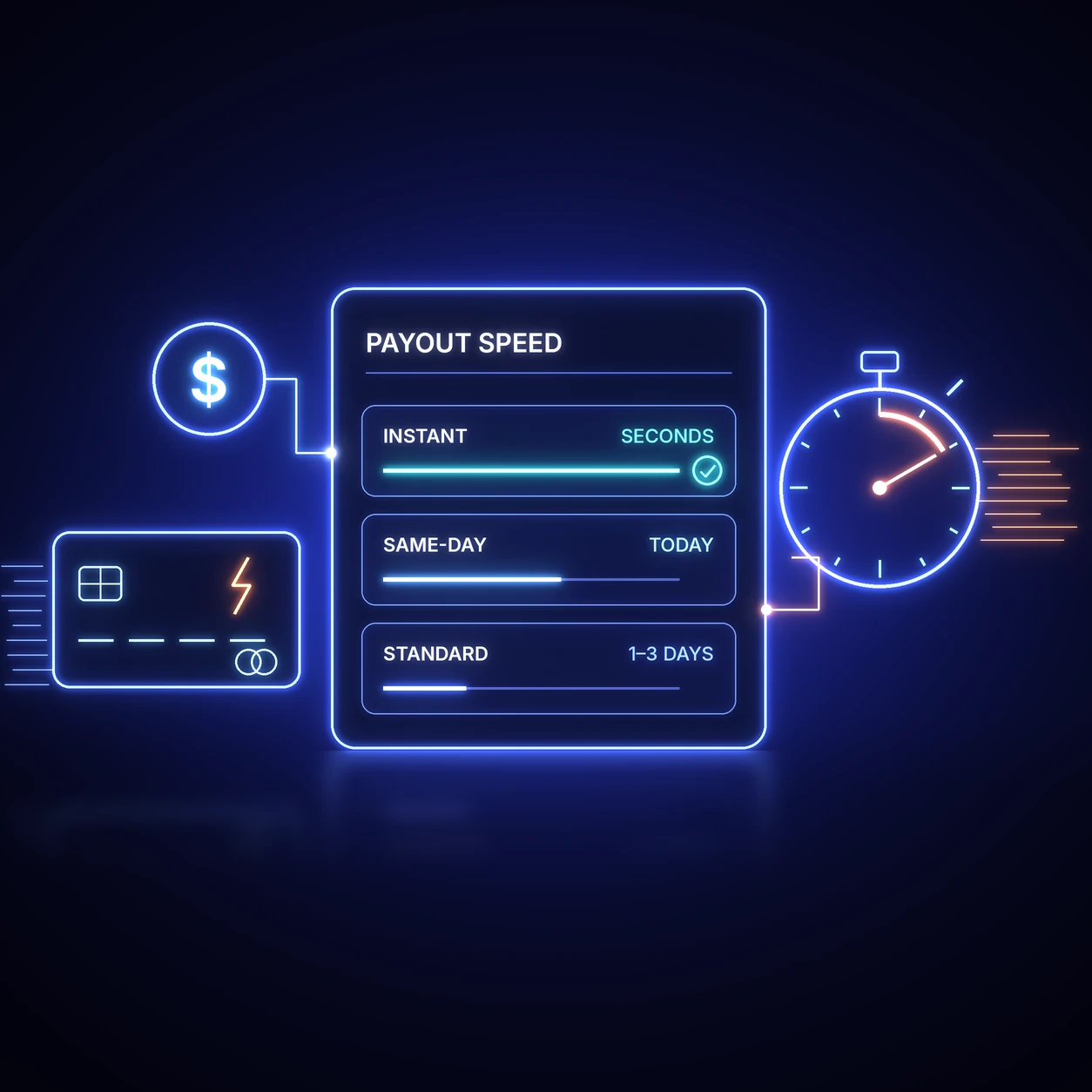
Instant payouts work differently from both: you send money you already owe your freelancers, on request, once the client has paid for the work. Because those funds are already in your account, nobody is fronting anything. A fourth option is paying more often on a set schedule, such as daily instead of weekly.
The biggest difference between these payout options is who puts up the money before the worker gets paid:
| Option | What the worker gets | Who fronts the money | Best fit |
| Earned wage access | Part of their approved earnings before the next scheduled payout | An earned wage access provider or your platform | Workers who wait a long time between approval and payout |
| Early wage access | Their full scheduled payout a day or two early | The worker’s bank, which releases the deposit before the official payment date | Workers who only need their regular payout a little sooner |
| Instant payouts | Approved earnings within minutes of requesting them | No one, since the client has already paid for the work | Platforms that want speed without advancing money |
| More frequent scheduled payouts | Approved earnings on a more frequent schedule | No one, as long as you pay out from collected client funds | Platforms that want workers paid more often without instant transfer fees |
Compare earned wage access platforms and providers
Payroll-integrated providers pull earnings data from an employer’s payroll system. That works for employees. Freelancers on your platform aren’t on payroll, so these providers have no earnings data to work with.
Embedded providers add earned wage access to your own app and use your platform’s records of approved work instead. For a freelancer platform, the best option is usually an embedded provider, since it’s the only type that can see what your freelancers have earned.
Ask each provider these five questions to see if it can work with freelancer earnings:
- How do you confirm what a freelancer has earned without payroll records?
- Who puts up the money for each advance?
- What does a freelancer pay per advance?
- Can freelancers request an advance within the platform, or do they need a separate app?
- Is the solution licensed in the states and countries where my freelancers live?
Weigh the costs and risks for your platform
Someone has to pay transfer fees on every advance; either the freelancer or your platform. If you fund advances yourself, you need enough cash on hand to pay freelancers before your clients pay you. A provider can fund advances instead, though it usually charges your platform or your freelancers for doing so.
If a client disputes work you already approved, you’d have to recover money the freelancer may have already spent. If a client never pays, your platform must absorb the advance or try to claw it back from the freelancer.
Fraudsters can also set up fake jobs between accounts they control and draw advances on them before anyone flags the scheme. Your support and finance teams would then have to chase those balances. Verifying payees before their first payout and screening them against watchlists makes this kind of scheme much harder to pull off.
You can avoid these risks by waiting until a client pays you, then sending the freelancer their approved earnings right away. Because the money is already in your account, you’re not advancing anything. The only cost left is the fee for a faster payout, like an instant transfer to a debit card. With predictable fees for faster payouts, such as a fixed charge per instant transfer, you know that cost before you send each payout and can decide which fees your platform should cover.
Check how earned wage access is regulated
Earned wage access is legal in the US, but the rules depend on the state. Twelve states have adopted laws or regulations for earned wage access providers. A few of them treat it as a loan, which brings in state lending laws and their limits on fees.
At the federal level, the Consumer Financial Protection Bureau issued a non-binding advisory opinion in December 2025. It said certain earned wage access products aren’t “credit” under the Truth in Lending Act. States can still set their own rules, and several do. The Earned Wage Access Consumer Protection Act would set a national standard, though as of November 2026 it hasn’t yet passed the House.
Keep in mind that both the federal opinion and most state rules describe workers paid through payroll. How they apply to contractor earnings on your platform is less clear, and rules outside the US vary by country. Confirm your setup with legal counsel before you launch.
When earned wage access makes sense for your freelancers
Many freelancers use each job’s earnings to pay their bills, so every day they wait for a payout matters. Earned wage access can shorten that wait without changing your payout schedule.
Freelancers who get paid sooner often face less financial stress, which gives them a reason to keep working on your platform. If you pay freelancers as soon as client funds clear, you can give them the same early access through payouts for freelancer platforms.
Compare how long your freelancers have to wait and how much risk you’re willing to take to pick the right option:
| Choose earned wage access if | Choose faster payouts if |
| Your payout cycle holds approved earnings for weeks | You can pay out as soon as client funds clear |
| Client billing or dispute windows keep you from changing your payout schedule | You control when payouts go out after the client pays |
| You can fund advances yourself or work with a provider that will | You’d rather not pay freelancers before clients pay you |
| Your counsel has confirmed how state rules apply to contractors | You want to stay clear of state lending rules |
Build payout flexibility into your platform
With flexible, fast payout methods, you can send approved earnings as soon as clients pay you, with no separate earned wage access platform to integrate. Your freelancers and gig workers get their earnings quickly, and you reduce operational overhead.
Trolley is payout infrastructure that gives your team control over when and how freelancers get paid. With payout automation, you can set approval workflows, track every payout’s status live, and send approved earnings instantly once client funds arrive. Book a demo to see how faster payouts could get your freelancers paid sooner without advancing any money.