

There’s a gap between the moment someone earns money on your platform and the moment they can actually spend it. A driver ends a shift on Saturday night. A creator crosses a payout threshold. A session musician’s royalties clear. Then they wait, sometimes through a weekend and a bank holiday, for the funds to land.
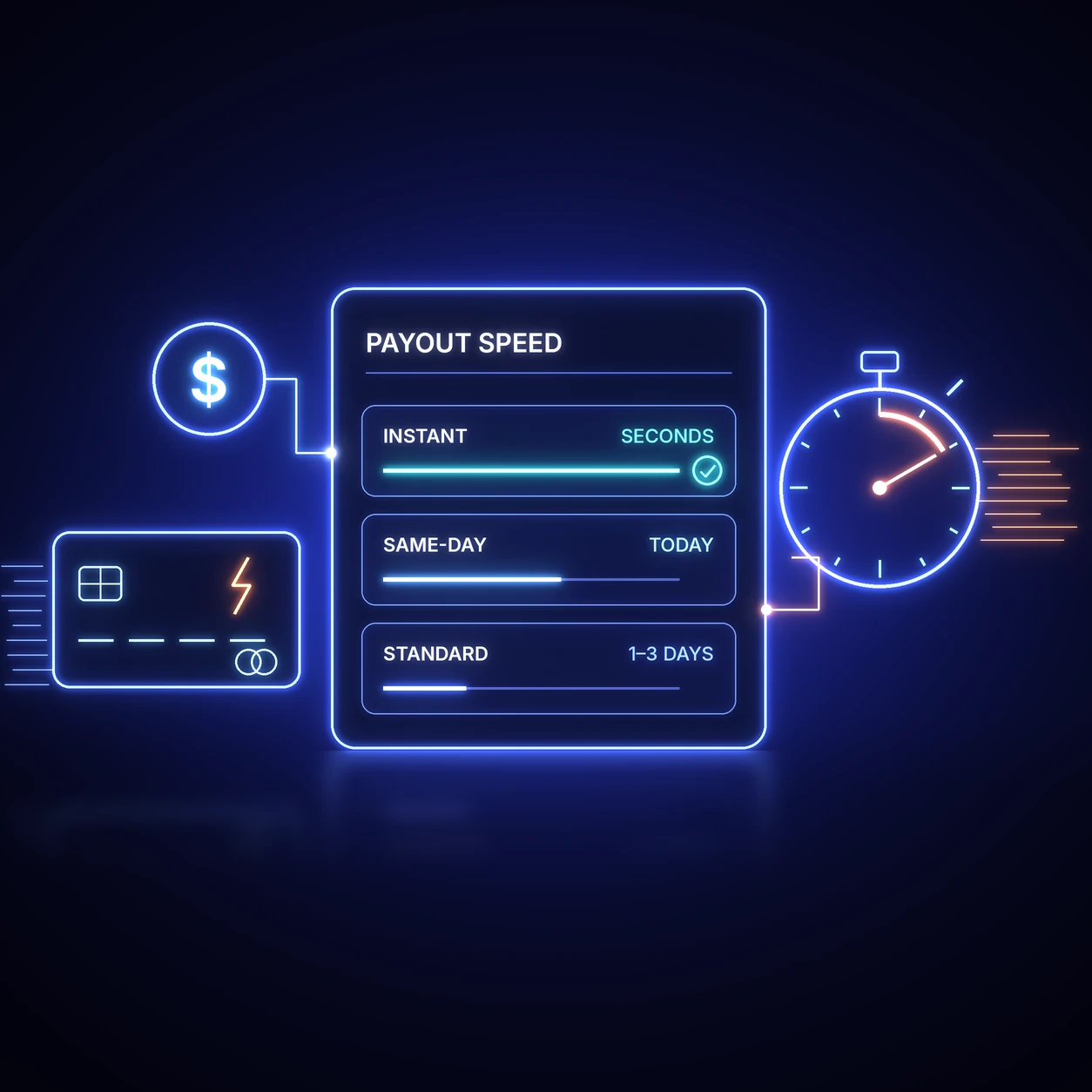
Push-to-card payouts close that gap. They send money directly to a recipient’s debit card over card network rails, often within minutes, at any hour. For platforms competing to keep freelancers, artists, and creators active, payout speed has stopped being a perk. Our recently published research report, How Independent Earners Want to Get Paid, found that 72% of recipients are unwilling to wait more than two days for a payout after finishing work or generating earnings, with 26% expecting it the same day. And this has a clear impact on churn: 41% of respondents said they have left, or would leave, a platform over payment delays.
Understanding how push-to-card payments work, and where they fit alongside other payment rails, helps you build a payout experience recipients trust.
What we cover
What are push-to-card payouts?
Push-to-card payouts are payments sent straight to an eligible debit or prepaid card through card networks, rather than through traditional bank transfer systems like the Automated Clearing House (ACH) network. The transaction runs in the opposite direction of a card purchase: instead of a merchant pulling funds from a card, your platform pushes funds to it.
That reversal also changes where the payout details come from. Bank transfers need an account number, a routing code, and sometimes SWIFT or IBAN details, so recipients have to stop and find a statement or log in to their bank. A card is already in their wallet, which means more of them finish setup on the first attempt and fewer contact support before they can get paid.
How push-to-card infrastructure works
Behind a push-to-card payment sits a chain of participants, and each one affects how quickly money reaches the person you paid. Your platform or payout provider submits the transaction to a network program such as Visa Direct or Mastercard Send, which routes it through acquiring partners to the recipient’s issuing bank. That last step determines when the recipient can actually spend the money.
Funds availability varies by institution, but Visa and Mastercard require issuers to make funds available within 30 minutes of approving the transaction, and many post in seconds. That speed is what the recipient experiences. What happens next, interbank clearing and settlement netted between banks on their own schedule, is invisible to them. Your reconciliation follows banking days while the person you paid is already spending.
Understanding card eligibility and network participation
Not every card can receive a push payment. Eligibility depends on card type, issuer, and country. Reloadable prepaid and debit cards are generally supported. Gift cards aren’t, and credit card eligibility varies by network, issuer, and use case, so many payout programs stick to debit and prepaid. Issuers that don’t participate in fast funds programs can take up to two business days to post, even when the transaction is approved immediately.
How you handle eligibility shapes what recipients experience. Checking eligibility during onboarding, setting expectations before someone commits to a method, and keeping a fallback rail available are what separate a smooth payout from a failed one no one can explain.
Why platforms are increasingly adopting push-to-card payouts
Gig marketplaces and creator platforms both compete for the same thing: people choosing to work through them instead of somewhere else. Payout timing is one of the clearest signals recipients get about whether your platform respects their time, and it shows up in the reviews and community threads where they compare their options.
Recipient liquidity has become a competitive advantage
Recipient liquidity, meaning the ability to reach earnings when they’re needed rather than when a batch runs, now shapes platform choice. In a 2021 Harris Poll cited by the Federal Reserve Bank of Kansas City, 78% of US workers aged 18 to 44 said free access to on-demand wages would increase their loyalty to their employer.
That expectation carries into independent work, where it matters even more because there’s no scheduled payday to plan around. Freelancers and gig workers rely on payouts to buy equipment or cover costs between contracts. Shortening the wait removes a source of financial pressure, and recipients weigh it when deciding where to keep working.
Common use cases for push-to-card payouts
Push-to-card fits best in five use cases where payment speed does more than simply close out a transaction:
- Gig and marketplace earnings, where instant cashout competes directly with rival apps, and recipients choose platforms partly based on how fast they can access what they’ve earned.
- Creator payouts, where tips and revenue shares arrive irregularly enough that timing shapes how professional a platform feels to the people publishing on it.
- Affiliate commissions, where faster payouts reward faster promotion cycles and keep affiliates prioritizing your program over competing ones.
- Incentive and reward payments, such as rebates, referral bonuses, and research participant payments, where speed is part of what makes the reward feel worthwhile.
- Insurance disbursements and contractor payments, where getting money to someone quickly reduces inbound support volume and signals that the platform takes their situation seriously.
Push-to-card is one payout option within a broader strategy
Instant payouts win adoption when recipients choose them, not when you impose them. Card coverage varies widely outside the US, and many recipients prefer local bank transfers or digital wallets they already use. A freelancer in Brazil, a producer in Nigeria, and a contractor in Germany may each want something different. Offering one fast method to all of them trades one constraint for another.
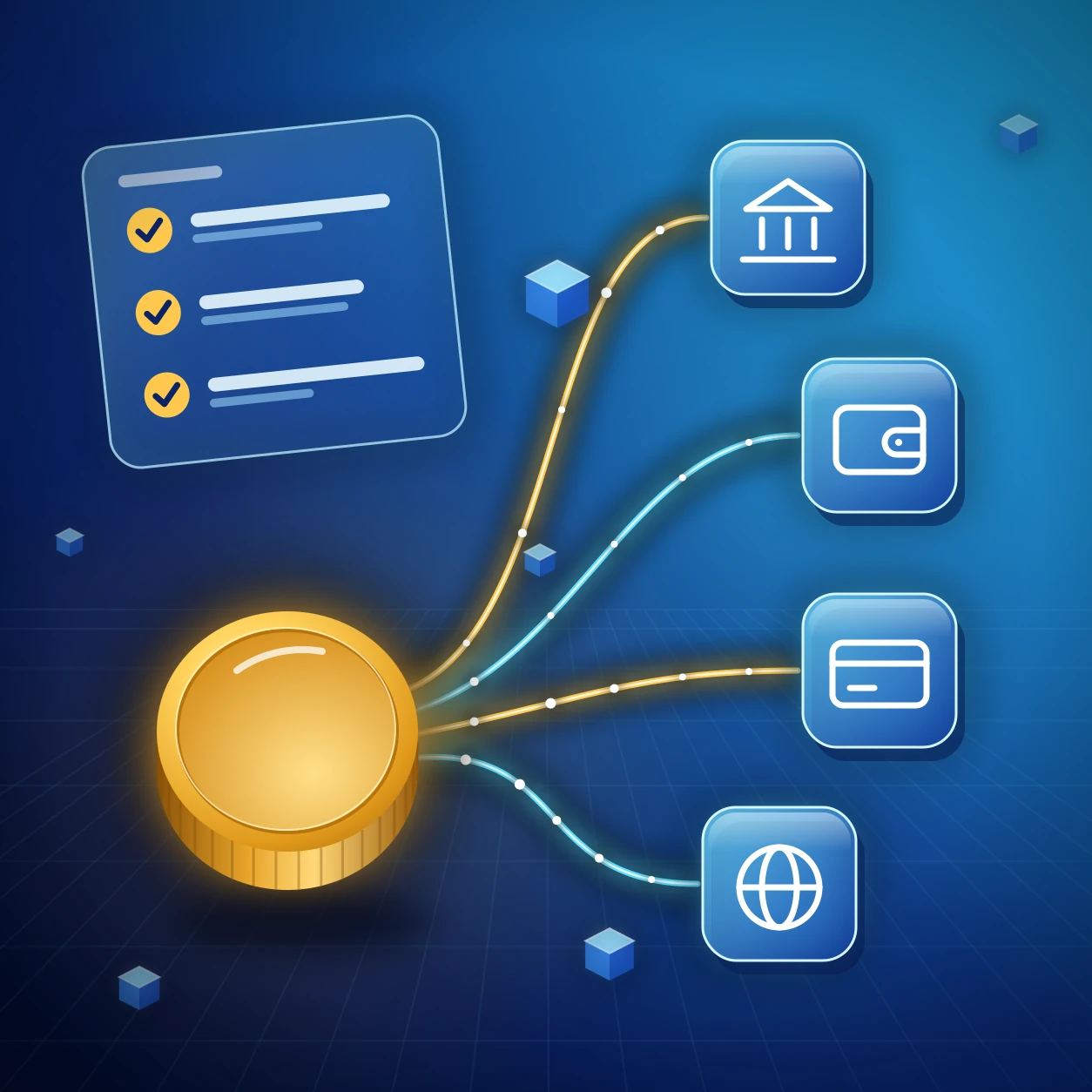
Payout flexibility is the real goal. Let recipients pick from the methods available in their market, show the cost and timing of each, and treat push-to-card as a strong option in the set.
If you’re weighing push-to-card against other rails, our guide to instant payouts to debit cards covers what to evaluate before you commit.
What platforms should evaluate before offering push-to-card payouts
Push-to-card comes with limits, costs, and controls worth understanding before it goes into your payout mix.
Transaction limits cap what you can move in a single payment, which matters most for larger royalty or contractor payouts. Per-transaction fees also tend to run higher than ACH, and country availability varies by network program and corridor.
Fraud exposure works differently, too. A pushed payment is fast and hard to reverse, so the controls that matter are card validation and velocity checks rather than after-the-fact recovery.
Compliance doesn’t get lighter either. You still need identity verification through Know Your Customer (KYC) checks, sanctions screening, and tax documentation before money moves. When those live in a separate system from your payout rails, speed on one side creates delays on the other. Choosing a secure mass payout API that handles verification and disbursement together prevents that split.
Balancing payout speed with cost and coverage
No single rail wins on speed, cost, and coverage at once, which is why the question isn’t which rail is fastest, but which mix covers the recipients you actually pay.
The domestic speed gap is narrower than it looks. Nacha estimates that roughly 80% of ACH volume settles in one banking day or less, so push-to-card rarely saves days on a US payment. What it changes is when money is available. ACH runs on fixed deadlines and settlement windows, all on business days, while rent comes due on a Sunday. Real-time bank rails like FedNow and RTP also move money around the clock in the US, but they need the recipient’s bank details and depend on their bank participating. Push-to-card needs only a card number.
Coverage is where the mix earns its place. ACH reaches US bank accounts only, and push-to-card depends on which issuers participate in which markets, so recipients spread across countries need local rails and wallets too.
Cost then follows from the mix rather than driving it. Many platforms make instant payouts an opt-in with a small fee and keep a standard rail free by default, which keeps spend predictable and lets recipients decide when speed is worth paying for. Where cross-border volume drives the bill, reducing cross-border payout fees matters alongside rail selection.
Building payout experiences around recipient expectations
Recipients don’t see the reasoning behind your rail selection. They see the methods that appear when they set up a payout and how long the money takes to arrive, and that’s what shapes their opinion of your platform.
Before a payout screen makes sense, identity verification, tax status, market coverage, and rail availability all have to resolve correctly. When those systems run on one platform, a recipient in São Paulo and a recipient in Ohio each see methods that actually work in their market. When they run separately, recipients get whatever combination happens to line up, which is rarely what they were expecting.
That’s the case for unified payout infrastructure. When push-to-card, bank transfers, digital wallets, and local rails run alongside onboarding, tax, and compliance in a single system, recipients get methods that work where they live, and your team stops managing the gaps between tools.
Trolley is one platform built on that model, covering 210 countries and territories. Explore Trolley‘s payout platform to see how it fits your stack.